

The question of how to become a teacher in Australia lands in my inbox almost every day. It’s clearly a topic that many people are curious about, whether they’re considering a career change, moving to Australia, or starting their professional journey. So, I’ve decided to write this article to share what I understand about the process and provide a clear roadmap for anyone asking this question.
Becoming a teacher in Australia when your first degree was completed overseas is absolutely possible, but it involves several formal steps: skills assessment, teacher registration, visas, and job search. This guide focuses on school teachers with overseas qualifications, using the Northern Territory (NT) as the main example.
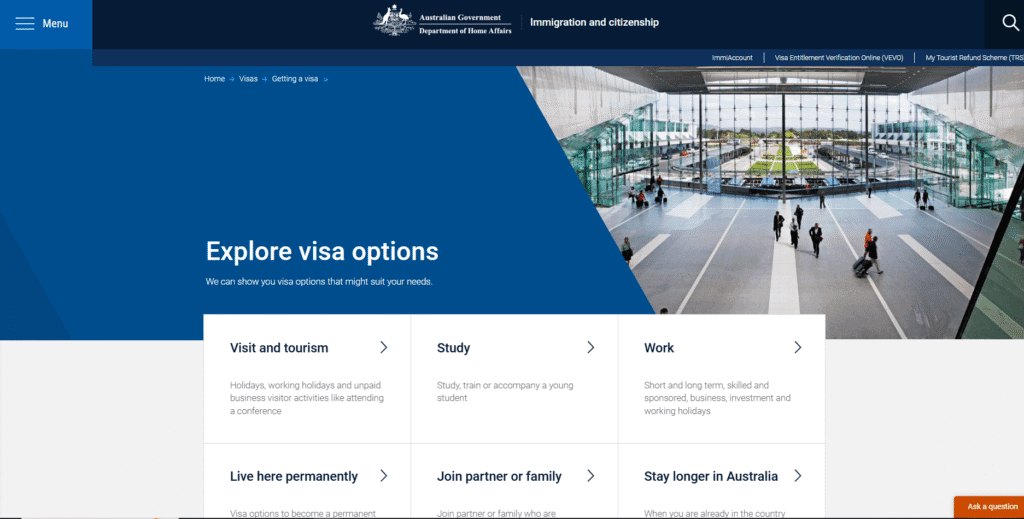
Important: This is general information, not immigration or legal advice. Visa rules change often, so always check the Department of Home Affairs website or speak to a registered migration agent
Step 1 – Know Your Starting Point
Pathway A – You are already in Australia
You might be here on a student visa, working holiday visa, partner visa, or another temporary or permanent visa.
A1. Confirm your long-term visa plan
- Check whether your current visa allows you to work as a teacher (e.g. hours per fortnight, employer conditions).
- If you want permanent residency or a longer-term work visa, check whether your teaching occupation (e.g. primary, secondary, special needs) is on the skilled occupation lists and which visa subclasses may apply (189, 190, 491, 482, 494, etc).
A2. Map your qualifications against Australian requirements
- For teaching jobs and teacher registration, Australian authorities generally expect at least four years of higher-education study including an initial teacher education (ITE) qualification with at least 45 days of supervised teaching practice.
- Gather:
- Degree certificates (testamurs)
- Full academic transcripts
- An official statement of supervised practicum from your university
A3. Check your English language profile
- For NT teacher registration, you must either have completed your qualifications in certain English-speaking countries (Australia, NZ, UK, Ireland, USA, English-speaking Canada) or meet specific test scores in IELTS Academic or ISLPR.
- If you will also apply for an AITSL skills assessment (for migration), you usually need either:
- Four years of higher-education study in approved English-speaking countries including your ITE qualification, or
- IELTS Academic with at least 7.0 in Reading and Writing and 8.0 in Speaking and Listening, all on one test report.
A4. Decide where you want to teach
- Choose to Teach in the Northern Territory if you are interested in:
- High comparative starting salaries (CT1 from $92,215 per year after October 2024, rising again in 2026 and 2027).
- Strong incentives for remote schools (allowances, rental concessions, travel benefits).
A5. Plan your sequence
For most people already in Australia, a sensible order is:
- Work out your visa pathway (with a migration agent if needed).
- Apply to AITSL for a teacher skills assessment if your visa type requires it.
- Once you have the right visa/work rights (or are close), apply for NT teacher registration.
- Apply for jobs in NT schools (government, Catholic, or independent).
Pathway B – You are outside Australia
If you are still overseas, you will usually need both a migration pathway and a job/teacher registration plan.
B1. Confirm your occupation and eligibility
- Check your occupation (e.g. Primary School Teacher ANZSCO 241213, Secondary School Teacher 241411, Special Needs Teacher 241511) is on the relevant skilled occupation lists.
- Make sure you are a qualified classroom teacher (Bachelor’s or Master’s in Education or equivalent).
B2. Understand the NT’s expectations for overseas teachers
The Teach in the Territory site sets out a five-step process for overseas teachers, including checking AITSL recognition, working rights, NT teacher registration, and Ochre Card (working with children clearance).
B3. Plan your AITSL skills assessment
For most skilled visas, you will need a positive AITSL skills assessment:
- Minimum four years of university study including a recognised initial teacher education program comparable to an Australian Bachelor degree or higher.
- At least 45 days of supervised teaching practice in a school, verified by an official university statement.
- English language proficiency through either:
- Four years of study in approved English-speaking countries including your ITE, or
- IELTS Academic 7.0 Reading/ Writing and 8.0 Speaking/ Listening.
B4. Choose your visa pathway
Common teacher pathways include:
- Points-tested skilled visas (e.g. 189, 190, 491)
- Employer-sponsored visas (e.g. 482, 186, 494) where a school sponsors you
- Training visa (407) if you meet experience requirements and are coming primarily for supervised training (PAX Migration Agent Adelaide).
Because visa rules are complex and change frequently, it is wise to check the Department of Home Affairs guidance and/or use a registered migration agent.
B5. Begin your job search early
While your skills assessment and visa are in progress, you can:
- Join the NT Classroom Teacher Recruitment Pool (one application to be considered for multiple schools).
- Apply for advertised vacancies on the NT Government jobs site.
- Contact specific schools (especially remote schools) with a tailored CV and cover letter.
B6. Prepare for teacher registration and clearances
Before you can start teaching in NT, you will need:
- NT Teacher Registration (via TRB NT)
- Ochre Card (NT Working with Children Clearance)
You can prepare documents for these while still overseas.
Step 2 – Meet Teacher Registration Requirements in the Northern Territory

Teacher registration is separate from migration/visa processes. Even with a perfect visa, you cannot teach in the NT without registration.
The regulatory body is the Teacher Registration Board of the Northern Territory (TRB NT).
2.1 Check that your qualifications meet NT standards
The TRB NT must be satisfied that you hold appropriate qualifications. Generally, they require:
- An ITE degree of at least four years full-time (or equivalent part-time) including at least 45 days of supervised practice teaching, or
- At least four years of full-time higher-education study leading to one or more degrees, including a teaching qualification of at least one year full-time with at least 45 days supervised practice.
Practical steps
- List all your completed higher-education qualifications.
- Confirm that the total adds up to four full-time years or more.
- Ask your teaching university for an official supervised practicum statement (duration, year levels, settings).
- Arrange certified translations if your documents are not in English.
2.2 Demonstrate English proficiency
If your initial teacher qualification was not obtained in Australia, NZ, UK, Ireland, USA or English-speaking Canada, TRB NT will assess your English via IELTS Academic or ISLPR.
For IELTS Academic, TRB NT requires:
- Overall band 7.5, with
- No score below 7.0 in Reading and Writing, and
- No score below 8.0 in Speaking and Listening.
For ISLPR, they require level 4 or higher in all four skills (Listening, Speaking, Reading, Writing), assessed at an approved, teacher-focused testing centre.
Practical steps
- Book IELTS Academic or ISLPR, allowing time for a retake if needed.
- Keep your original test report – TRB NT will want a copy and may verify it.
- Remember results generally must be less than two years old at time of application.
2.3 Prove you are “fit and proper” and competent
TRB NT checks that you are competent to teach and a fit and proper person. They consider:
- Criminal history (police checks from each country where you have lived)
- Whether you hold an NT Working with Children clearance (Ochre Card)
- Any previous disciplinary action or cancelled registrations
- Any health issues that may affect safe professional practice
Practical steps
- Obtain national police checks from your home country and any other relevant countries.
- When you arrive in NT, apply for an Ochre Card.
- Prepare a detailed CV showing your teaching experience and any gaps.
2.4 Choose the right registration category
In NT, the main categories are:
- Provisional registration – for early career teachers or those without enough recent teaching experience in Australia/NZ.
- Full registration – typically requires at least 180 days of recent teaching service within the last five years in Australia or NZ.
Most overseas-trained teachers without Australian experience start with provisional registration.
Step 3 – Get Your Teaching Qualification Assessed (AITSL)

If you want to migrate on a skilled teacher visa, you usually need a skills assessment from AITSL (Australian Institute for Teaching and School Leadership).
AITSL’s skills assessment is for migration purposes only and is separate from teacher registration.
3.1 Confirm that AITSL is the correct assessing authority
AITSL assesses school teacher occupations including:
- Early Childhood (Pre-Primary) Teacher – 241111
- Primary School Teacher – 241213
- Secondary School Teacher – 241411
- Special Needs Teacher – 241511
- Teacher of the Hearing or Sight Impaired – 241512/241513
- Special Education Teachers nec – 241599
3.2 Check you meet the two key AITSL criteria
AITSL assesses two main things: qualifications and English language proficiency.
- Qualifications
- At least four years of university study (full-time equivalent)
- Must include a recognised initial teacher education qualification comparable to at least an Australian Bachelor degree (AQF 7).
- Must include at least 45 days of supervised teaching practice in schools.
- English language
- Either four full years of tertiary study in approved English-speaking countries including your ITE, or
- IELTS Academic with 7.0 in Reading and Writing and 8.0 in Speaking and Listening, within the last 24 months.
3.3 Gather your documents
You will need (in colour, good resolution):
- Passport and two additional identity documents
- Degree certificates for all higher-education qualifications
- Full academic transcripts
- Official practicum statement (duration, year levels, context)
- IELTS Test Report Form (if using the test option).
3.4 Submit your application to AITSL
- Create an account in the AITSL Applicant Portal.
- Complete the online form for your nominated occupation.
- Upload documents and pay the fee.
- Wait for the outcome (current processing times are published on the AITSL website).
A suitable skills assessment outcome can then be used in skilled visa applications.
Step 4 – Find Employment as a Teacher in the Northern Territory

Once you have (or are close to) work rights and registration, the next step is employment.
4.1 Understand the school sectors in the NT
In the Northern Territory you can work in:
- NT Government schools – urban and remote; recruited mainly through Teach in the Territory.
- Catholic Education NT – with strong remote presence and incentives.
- Independent schools – especially in Darwin and Alice Springs.
4.2 Use the NT Government recruitment channels
The Teach in the Territory – Overseas teachers page outlines three main pathways:
- Classroom Teacher Recruitment Pool – one application, used by many schools to find teachers.
- Advertised vacancies – listed on the NT Government careers website.
- Contacting schools directly – particularly useful if you are interested in a specific community or remote area.
In each case, you should prepare:
- An Australian-style CV highlighting teaching experience, curriculum, and age groups
- A one-page cover letter that addresses the role and notes if you need sponsorship
- Two recent referees at principal/assistant principal level (or final practicum report if you are a recent graduate)
4.3 Evidence for salary placement
When you accept a job, you will usually be asked for statements of service from previous employers. NT uses these to place you on the correct salary step.
4.4 Explore remote incentives and benefits
Teaching in remote NT schools often attracts significant benefits:
- Remote Incentive Allowance and Remote Retention Payments for NT Government teachers
- Rental concessions up to 100% and fully furnished housing in many Catholic Education NT remote communities
- Free annual airfares (FOIL) to Darwin or Alice Springs for remote teachers and families
These incentives can make remote teaching financially attractive, but you need to be ready for isolation and cultural adjustment.
Step 5 – Move to Australia and Settle in the NT
If you are still overseas, this step is about turning your plans into reality.
5.1 Finalise your visa
Practical steps
- Work with a migration agent or follow Department of Home Affairs guidance to:
- Lodge Expressions of Interest (EOI) for points-tested visas, or
- Arrange employer sponsorship if a school is willing to sponsor you.
- Keep track of changing income thresholds, points requirements, and priority occupations.
5.2 Prepare for relocation
- Budget for:
- Flights to Australia
- Initial accommodation in Darwin, Alice Springs or another hub
- Costs of shipping personal items
- If you have an NT Government or Catholic Education remote job:
- Ask exactly what relocation support is provided (e.g. transport from Darwin to the community, freight allowances).
5.3 On arrival in the NT
In your first few weeks, you will usually:
- Apply for an NT Ochre Card (Working with Children clearance) if not already done.
- Activate or finalise your NT teacher registration if there were any outstanding documents.
- Set up essentials:
- Tax File Number (TFN)
- Australian bank account
- Superannuation fund
- Attend any induction programs offered by your employer.
Step 6 – What to Expect as a New Teacher in the Northern Territory
The NT is different from many other parts of Australia. It offers some of the highest teacher salaries and significant financial incentives, but also distinct challenges.
6.1 Salary and conditions
- Graduate classroom teachers (CT1) in NT Government schools currently start at around $92,215 per year, rising to over $100,000 by 2027 under the current enterprise agreement.
- Salaries increase each year and there are higher levels for experienced teachers and leaders.
6.2 Remote teaching reality
Remote and very remote schools often provide:
- Subsidised or fully subsidised housing
- Remote incentive and retention payments
- Free or subsidised flights out of the community each year (FOIL)
However, research and media reports show that teachers in remote NT schools can face:
- Professional isolation and limited access to services
- Limited resources compared with urban schools
- High expectations around community engagement
- Emotional fatigue, especially when dealing with complex student needs
Many teachers leave remote NT postings after a few years despite the incentives, because money cannot fully compensate for isolation and workload pressures.
6.3 Curriculum and teaching practice
- You will usually teach the Australian Curriculum and, in senior secondary, NT Certificate of Education and Training (NTCET) or equivalent.
- You will be expected to align your practice with the Australian Professional Standards for Teachers, which TRB NT uses to judge competence.
6.4 Induction and professional learning
Support varies between schools, but you can expect some combination of:
- School-based mentoring and informal coaching
- Department or system-level induction programs
- Professional learning in areas like trauma-informed practice, literacy and numeracy, Aboriginal and Torres Strait Islander education, and classroom management.
As a provisional teacher, you will work towards full registration, collecting evidence that you can meet the Standards in an Australian context.
6.5 Job security and demand
Australia has experienced a national teacher shortage, particularly in certain subject areas and remote locations. The NT currently reports relatively small numbers of public school vacancies, but remote and hard-to-staff schools continue to need qualified teachers (ABC)
For overseas-trained teachers who meet registration, English and visa requirements, this can translate into strong employment opportunities, especially if you are open to remote or regional placements.
Final Tips and Quick Checklist
At a glance – If you are already in Australia
- ✅ Confirm visa/work rights and long-term migration plan
- ✅ Check that your total higher-education study = 4+ years, including an ITE qualification with 45+ practicum days
- ✅ Meet English test requirements (IELTS/ISLPR) for TRB NT and possibly AITSL
- ✅ Apply for AITSL skills assessment if your visa needs it
- ✅ Apply for NT teacher registration (usually provisional)
- ✅ Join NT recruitment pool, apply for jobs, and gather statements of service
At a glance – If you are overseas
- ✅ Confirm your teaching occupation and eligibility for skilled migration
- ✅ Gather documents for AITSL: degrees, transcripts, practicum statement, identity, English test
- ✅ Apply for AITSL skills assessment
- ✅ Work with a migration agent or follow DOHA guidance to choose a visa pathway
- ✅ Begin applying to NT schools and the recruitment pool, indicating if you need sponsorship
- ✅ Prepare for NT teacher registration and Working with Children clearance
- ✅ Plan relocation, including housing and remote living considerations